
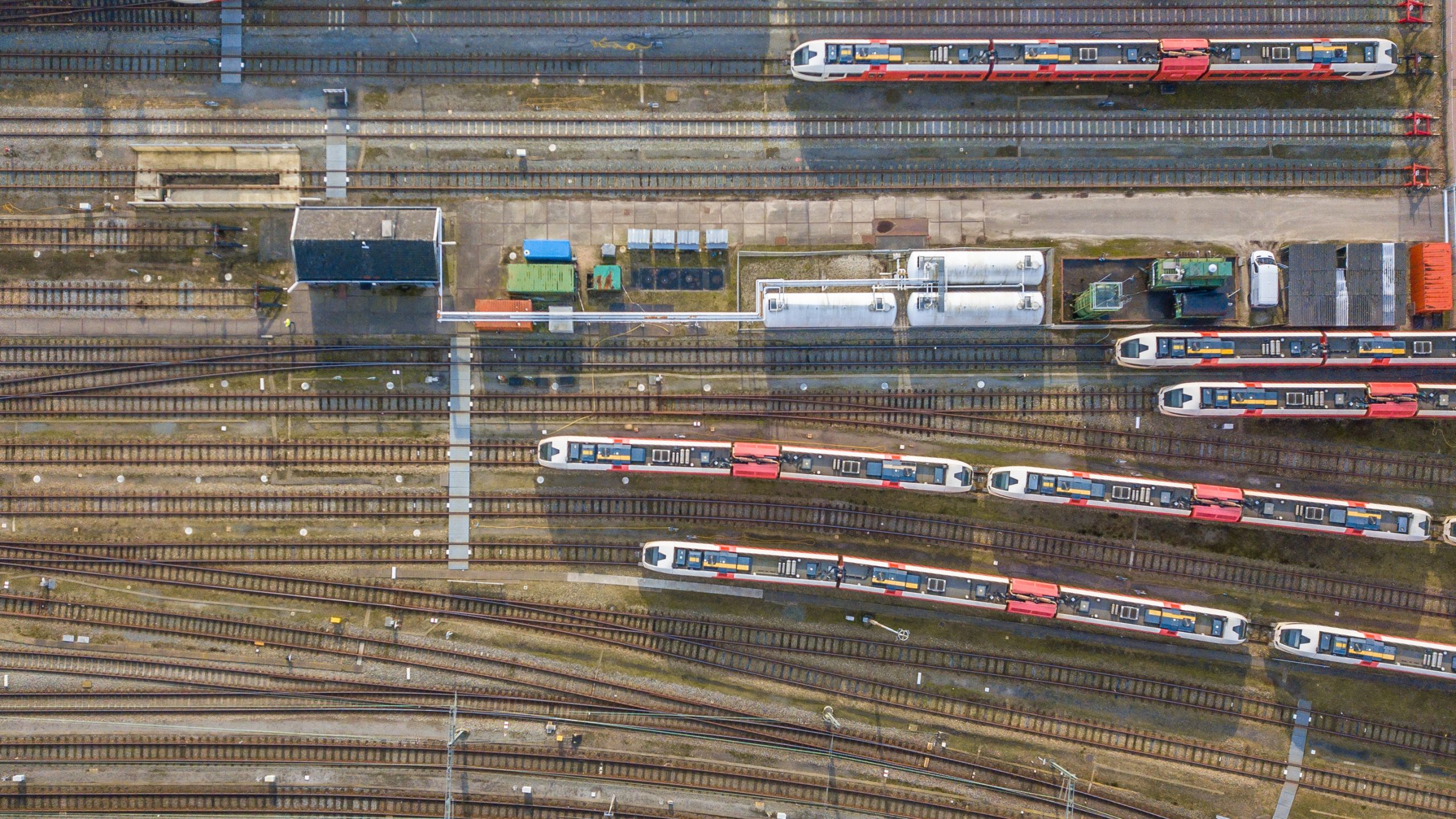
A railway project is not managed solely in time, but within the operational constraints of an active network.
Work under traffic, limited track possessions, dense interfaces between systems:
a sequencing error can directly affect safety and network availability.
A railway project is characterized by:
construction activities performed under live rail operations
limited and highly constrained possession windows
complex interfaces between civil works, track, catenary, and signaling
restricted and evolving work areas
strict safety and regulatory requirements
Planning must reflect not only what is executed, but also where it takes place, within which possession window, and in coordination with which systems.
On a railway project, what is not clearly visible in the schedule will eventually impact operations.
A purely time-based schedule:
hides work zone conflicts
does not clearly represent track possession windows
separates operational constraints from real phasing
makes co-activity between trades difficult to anticipate
Result:
The schedule becomes difficult to use as an operational coordination tool.
A delay within a possession window may not appear critical in a traditional Gantt chart — until it affects the railway timetable.
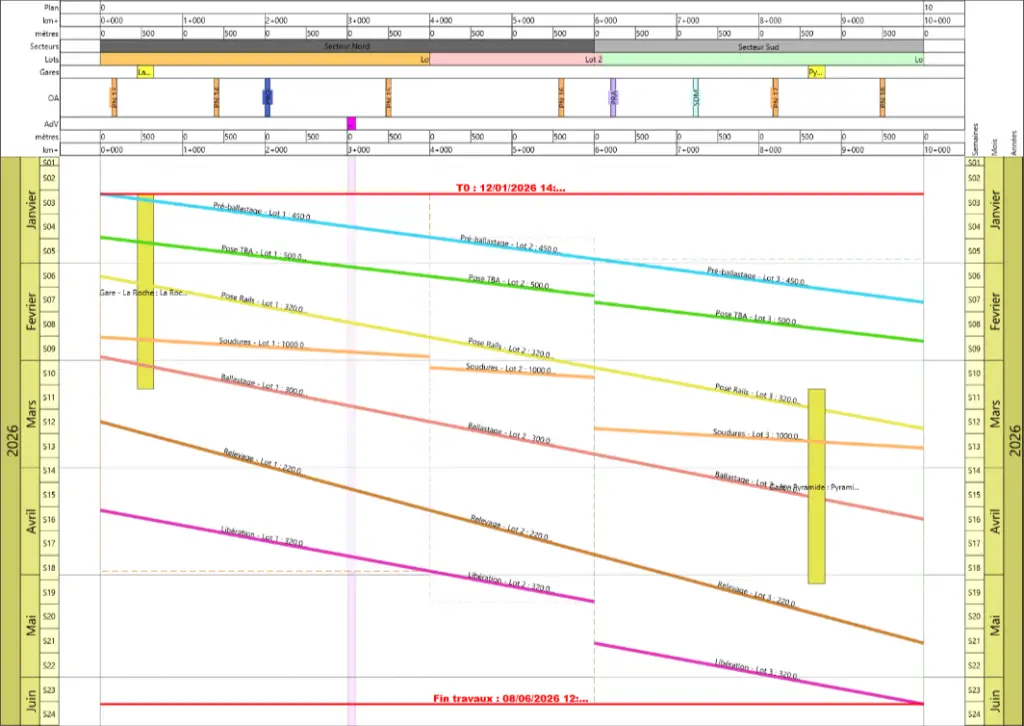
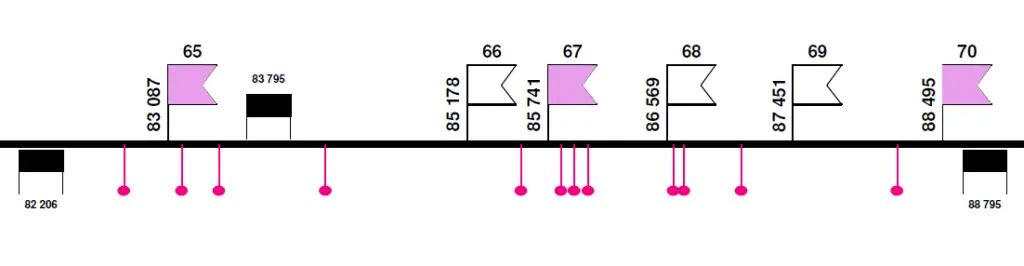
With TILOS 360, the railway project is planned:
along the actual track alignment
integrating possession windows and work zones
coordinating multi-trade interventions
incorporating operational and safety constraints
and managing spatial overlaps between teams
Each activity is positioned simultaneously:
in time
in physical space along the railway
and in relation to other systems and trades
The schedule becomes a shared operational coordination tool, not just a contractual document.