

A highway project is not managed through isolated work phases, but under continuous traffic constraints.
Traffic maintenance, staged diversions, safety requirements for both users and crews:
the sequencing strategy directly determines feasibility and performance.
A highway project is characterized by:
construction activities performed under live traffic
complex traffic switch phases and temporary alignments
evolving and constrained work zones
strong safety requirements
multiple interfaces between earthworks, structures, pavements, and equipment
Planning must reflect not only what is built, but also how traffic is maintained at every stage.
On a highway project, the schedule must be understandable to both construction teams and the operator.
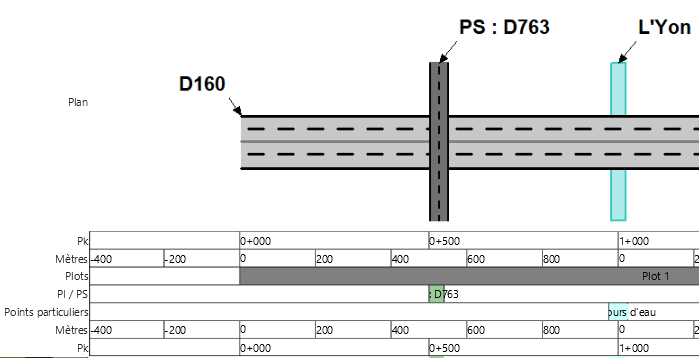

A purely time-based schedule:
does not clearly show traffic switch phases
hides work zone conflicts
separates operational constraints from real phasing
makes the impact on road users difficult to anticipate
Result:
The schedule becomes difficult to use for coordinating sensitive phases and securing high-risk transitions.
What is unclear in the phasing often becomes critical during traffic switches.
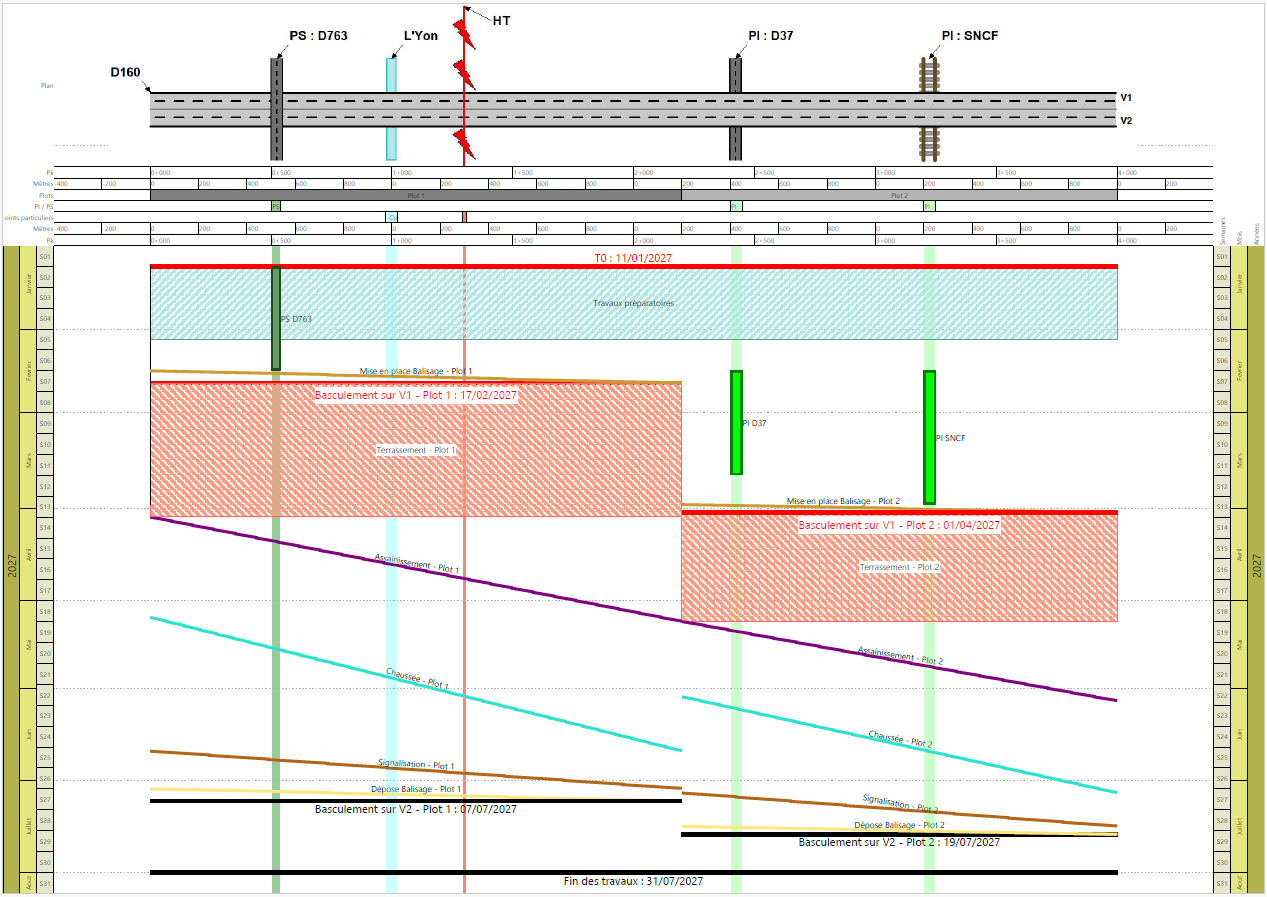
With TILOS 360, the highway project is planned:
along the actual roadway alignment
integrating successive work zones
incorporating traffic diversions and switch phases
reflecting access and safety constraints
and managing interfaces between trades
Each activity is positioned simultaneously:
in time
in physical space along the corridor
and in relation to traffic flows and other operations
The schedule becomes a true coordination and decision-support tool, not just a reporting chart.