

A high-rise building project is not managed floor by floor, but through controlled production cycles across vertical space.
Stacked trades, shared lifting equipment, vertical logistics constraints:
a delay on one level can propagate upward through the entire structure.
A high-rise building project is characterized by:
repetitive floor cycles
structured production rhythms (core walls, slabs, fit-out)
constrained vertical logistics (tower cranes, hoists)
intensive trade stacking and co-activity
permanent interfaces between structure, envelope, and MEP
Planning must reflect not only what is executed, but also on which level, within which cycle, and using which shared resources.
In a high-rise project, a delay at Level 5 will eventually be visible at Level 25.
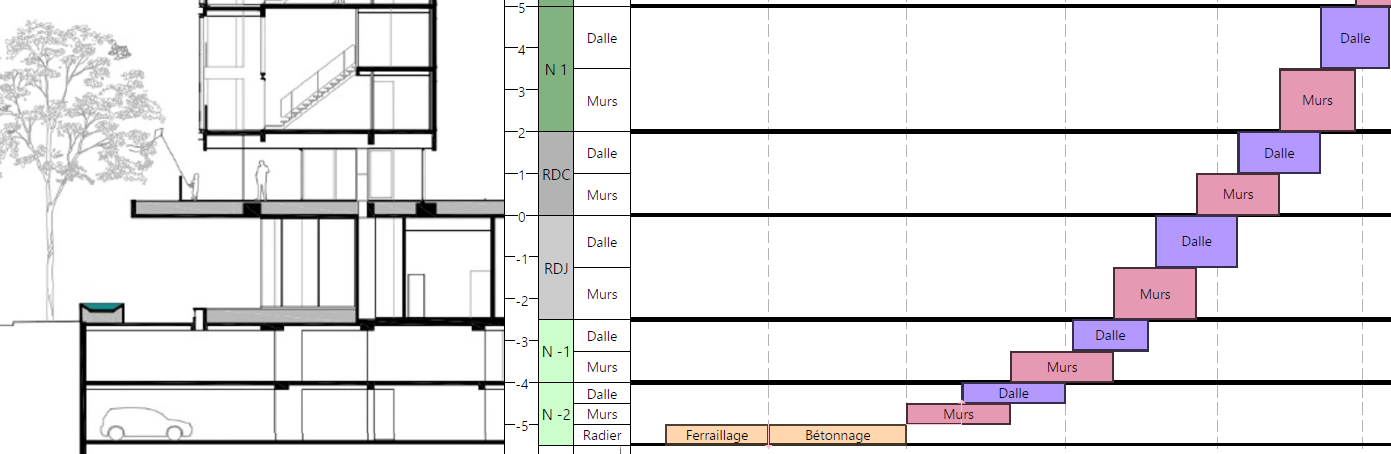

A purely time-based schedule:
does not clearly display repetitive cycles
hides crane and lifting conflicts
separates vertical work zones from real production rates
makes trade stacking conflicts difficult to anticipate
Result:
The schedule becomes difficult to use as a true production control tool.
What looks coordinated in a traditional Gantt chart may become critical when vertical logistics constraints are considered.
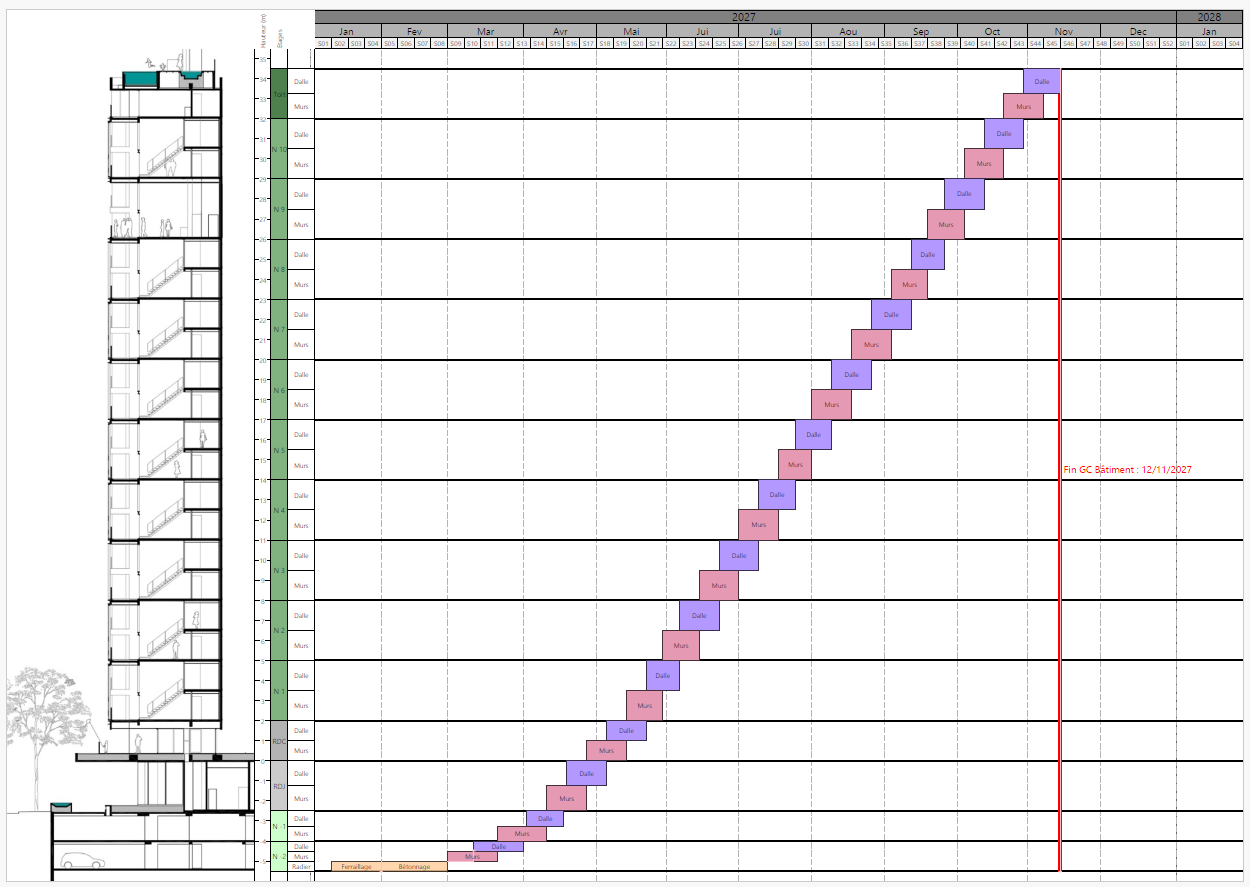
With TILOS 360, the high-rise project is planned:
by levels or vertical zones
integrating repetitive production cycles
reflecting actual production rates
incorporating crane and lifting constraints
and managing interfaces between trades
Each activity is positioned simultaneously:
in time
in vertical space
and in relation to other trades and shared resources
The schedule becomes a coordination and cycle management tool, not just a reporting document.