

An earthworks project is not managed by volumes alone, but by controlling production flows across space and time.
Variable quantities, weather dependency, evolving work zones, and logistics constraints:
poor sequencing quickly affects productivity and overall project performance.
An earthworks project is characterized by:
large and often variable cut and fill volumes
evolving work zones along the alignment
production rates influenced by weather conditions
strong interaction between excavation, hauling, and placement
continuous coordination of heavy equipment fleets
Planning must reflect not only what is moved, but also where, at what rate, and under which logistical conditions.
On an earthworks project, the schedule must make production flows visible — not just tasks.
A purely time-based schedule:
disconnects volumes from real production rates
hides conflicts between work zones
does not clearly show equipment interactions
makes productivity risks difficult to anticipate
Result:
The schedule becomes difficult to use as a true production control tool.
What is not spatially visible in the schedule often translates into lost productivity on site.
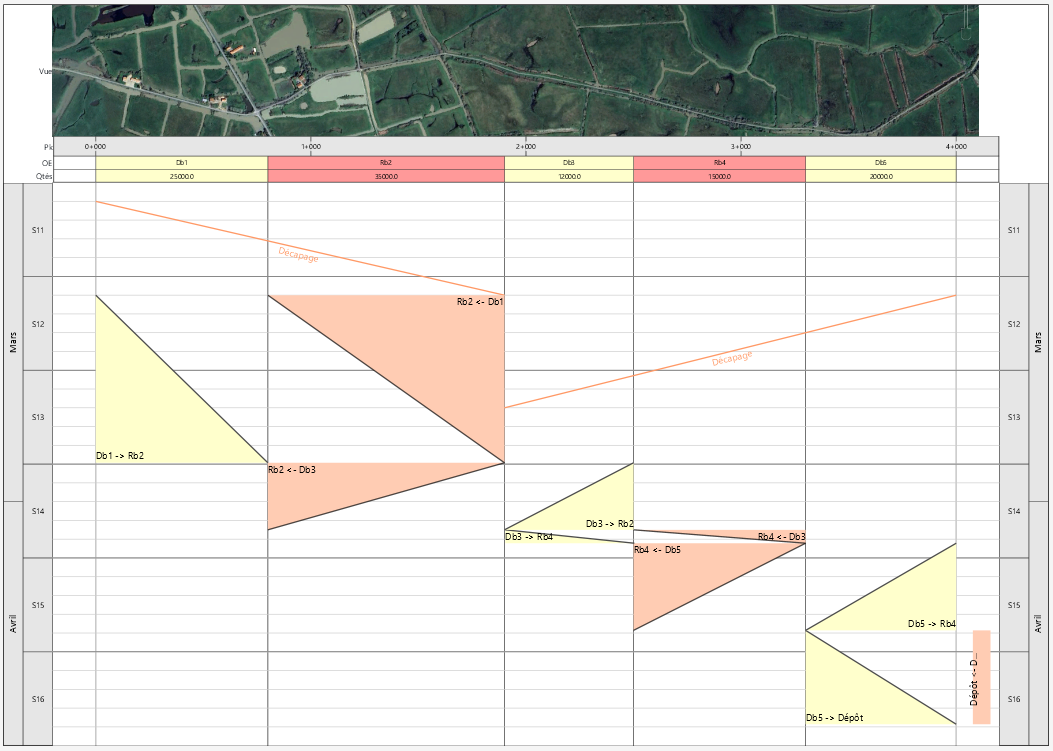
With TILOS 360, the earthworks project is planned:
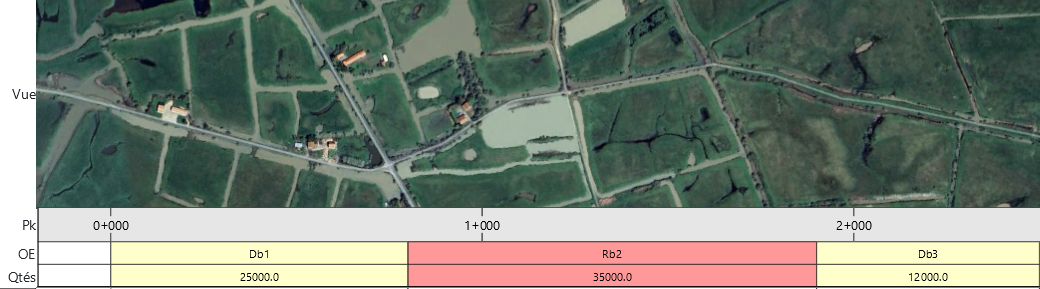
along the actual alignment or by geographic zones
integrating cut and fill volumes
reflecting production rates and equipment flows
incorporating access and haul road constraints
and anticipating weather-related impacts
Each activity is positioned simultaneously:
in time
in physical space
and in relation to other production flows
The schedule becomes a real operational steering tool, not just a reporting document.